

Caring for your health begins with movement
Article29. 09. 2024
The overball, a small inflatable ball about 20-25 cm in diameter, is becoming an increasingly popular tool in fitness, rehabilitation, and relaxation. This versatile tool is suitable for home workouts, fitness centers, and physical therapy. So, what makes the overball so special, and how can it be used effectively?
Why an Overball?
The overball is made of a soft, elastic material that can be easily inflated to the desired firmness. This makes it an excellent tool for strengthening the core, improving balance, and increasing flexibility. Additionally, its portability and compact size allow it to fit in a bag or backpack, making it the perfect companion for travel.
Benefits of Exercising with an Overball
- Strengthening deep muscles: Due to its unstable nature, the overball activates deep muscles that are often neglected during traditional exercises. This helps improve body stability and supports proper posture.
- Improving flexibility: The ball is great for stretching exercises that relax muscles, increase range of motion, and reduce the risk of injury.
- Gentle on joints: The overball is often used in rehabilitation because exercises with it reduce stress on joints and tendons. It’s suitable for people recovering from injuries or suffering from joint pain.
- Exercise variety: You can use it in classic exercises such as squats, push-ups, or sit-ups, as well as for balance and stability exercises, making it ideal for both beginners and advanced athletes.
ACTIVE EXCERCISES
1.
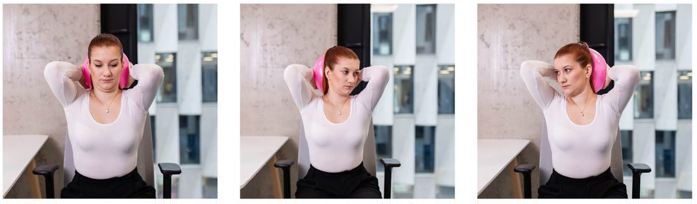
Neck Release. Hold a half-inflated overball behind your head and, with slight pressure, tuck your chin (the “drawer” technique). Slowly rotate your head while breathing deeply.
2.
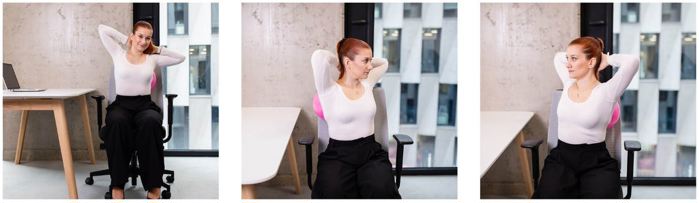
Place the overball on your chest and rotate your torso to the left and right, gently leaning to the sides. Then rotate your torso left and right again. This helps release the thoracic spine and stretch the muscles.
3.
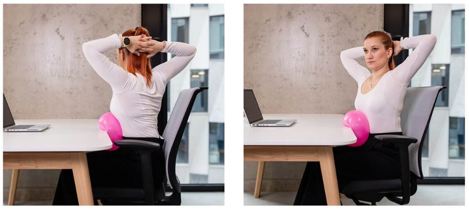
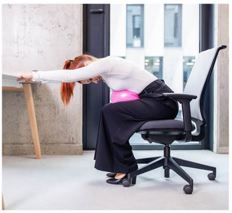
Place the overball in the area of the front ribs or upper abdomen, leaning on a table for support. Rotate your torso while keeping your spine straight.
4.
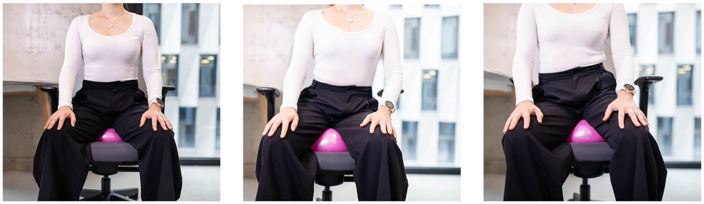
For exercises to release the pelvis, lower back, hip joints, knee joints, and to improve blood circulation in the legs, sit on a half-inflated overball. Gently shift your pelvis side to side, then tilt it forward and backward.
5.
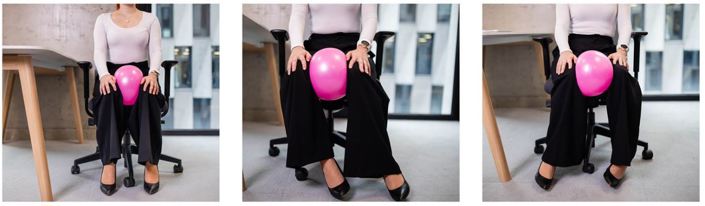
Place an inflated overball between your knees and perform circular movements originating from your hip joints.
SUPPORTING PROPER SITTING
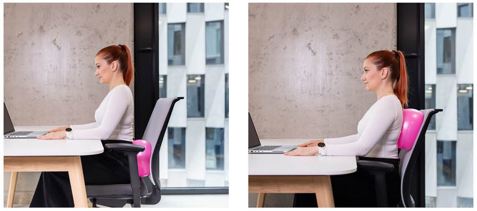
Throughout the day, place the overball in areas of your spine that are most problematic during long periods of sitting. Alternate sitting with and without the overball to help correct posture and align your spine.
RELAXATION AND BREAKS
I recommend taking a break every 30 minutes during sedentary work. Use the break for active exercises or relaxation.
1.
Rub your palms together and place them on your closed eyes. You’ll feel relief in your eyes, which are strained from looking at a computer.

2.
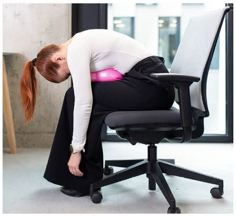
Place the overball in your abdominal area, bend forward, close your eyes, and take deep breaths. You’ll feel relief in your chest and neck area.
3.
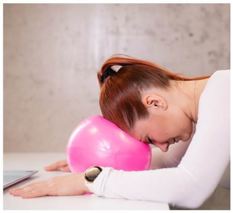
Rest your forehead on the overball, letting the weight of your head sink into the ball, and breathe deeply again.
4.
Place the overball in your abdominal area, bend forward, close your eyes, and breathe deeply. You’ll feel relief in your neck, chest, and lower back.
5.
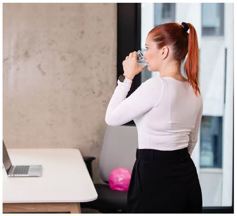
Stand up several times throughout the day and walk around. You can place your printer in a more distant part of the office. Maintain regular fluid intake. Breaks will improve your concentration and speed up your metabolism, which slows down after 30 minutes of inactivity.
Exercise tips by Ivana Koldová, DiS., Physiotherapist at Canadian Medical.