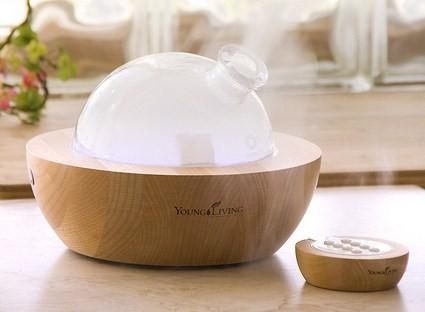
Aromatherapy - use of essential oils
Article19. 09. 2018
What are Essential Oils?
Essential Oils are Aromatic volatile liquids distilled from shrubs, flowers, trees, roots, bushes & seeds. The chemistry of essential oils is very complex: each one may consist of hundreds of different and unique chemical compounds. Moreover essential oils are highly concentrated and far more potent than dried herbs. The distillation process is what makes essential oils so concentrated. It often requires an entire plant or more to produce a single drop of distilled essential oil.
Essential Oils are also different from vegetable oils such as corn oil or olive oil. They are not greasy and do not clog pores like many vegetable oils can.
How do they work?
The human body is composed of around 100 trillion cells. Essential Oils are composed of around 40 million trillion molecules per single drop! How can so many molecules fit into a single drop? They are extraordinarily small, which enables them to pass through all of our tissues and directly into our cells.
Essential Oils and human blood share several common properties: They fight infection, contain hormone-like compounds and initiate regeneration. Working as the chemical defense mechanism of the plant, essential oils possess potent antibacterial, anti-fungal and antiviral properties. The ability of some essential oils to work as hormones helps them bring balance to many physiological systems of the human body. They also have a chemical structure that is similar to that found in human cells and tissues. This makes essential oils compatible with human protein and enables them to be readily identified and accepted by the body.
In the human body, essential oils stimulate the secretion of antibodies, neurotransmitters, endorphins, hormones and enzymes.
What Essential Oils are safe to use?
One of the factors that determines the purity of an oil is its chemical constituents. These constituents can be affected by a vast number of variables, including: the parts of the plant from which the oil was produced, soil condition, fertilizer (organic or chemical), geographic region, climate, altitude, harvesting methods and distillation process.
Given the power & potency of essential oils, it is of utmost importance to obtain the purest essential oils possible. No matter how costly pure essential oils may be, there can be no substitute.
Inferior quality or adulterated essential oils will most likely not produce therapeutic results and could possibly be toxic.
In Europe, a set of standards has been established that specifies the types and amounts of principal constituents that a quality essential oils should have (known as AFNOR and ISO).
Young Living Essential Oils meet all the criteria & marks for highest purity and quality, thanks so their Seed to Seal process.
How are Essential Oils used?
Essential Oils can be used topically (directly on your skin) and aromatically by diffusing with a diffuser or inhaling directly from the bottle. In addition, certain Essential Oils can also be used internally by ingesting. Young Living calls these oils “Vitality Oils”. That way, you can easily tell which oils are safe for ingestion and which are not.
1. Aromatically
Essential Oils are best known for their aromas, which can help create an environment to suit your specific needs. They can be inhaled directly from the bottle, diffused using a diffuser or added to non toxic cleaning products as well as beauty staples.
2. Topically
Many essential oils have skin enhancing benefits, and can be applied directly to the skin or added to your existing beauty products. You can also combine them with a carrier oil or your daily moisturizer for easy application.
3. Internally
Many Essential Oils can be taken internally. Young Living’s Vitality line is specifically labelled for internal use, making it east to add a splash of flavor to food and drinks or to take oils in capsules as a dietary supplement.
Sources: “The Essential Oils Truth” Jen O’Sullivan, “Essential Oils - Integrative Medical Guide” D. Gary Young, ND
Galery